
County Mayo rewards travellers who like their history served with fresh air and a sense of discovery. It is a county where dramatic landscapes and local stories feel inseparable, and where a single viewpoint can open up a conversation about settlement, survival, and identity. When guests tell us they want the Ireland that feels lived in, not staged, Mayo is often the answer. It is also a brilliant place to slow down and follow family clues, especially for visitors arriving with County Mayo genealogy on their mind. If you are starting to shape your itinerary, you can explore options on our Tours.
Why Mayo feels so distinct
Mayo has a big, open character. The coast can be rugged and raw, inland landscapes feel spacious, and small towns still carry a strong local identity. That sense of place matters because heritage is not only found in famous buildings. It is in townlands, old roads, churchyards, markets, and the way communities have grown around land and water. Mayo also sits at a cultural crossroads in the west, where tradition has remained visible, from language and music to local storytelling.
For visitors, this means the day does not need to be packed to feel rich. A well-paced route, with time to stop, look, and ask questions, often creates the strongest connection.
Heritage you can feel in the landscape
In Mayo, history is rarely confined to one site. You see layers. Ancient traces sit near later religious and community life, and the landscape itself helps explain why people lived where they did. Coastal routes speak to fishing and trade, inland routes to farming and seasonal work, and the distribution of towns hints at social change across generations.
We often encourage guests to think in terms of patterns rather than isolated facts. Why did a family move from one valley to another? Why do certain surnames cluster in one area? Why does a graveyard contain multiple spellings of what appears to be the same name? Those are the kinds of questions that turn a scenic day into a heritage day.
Making Mayo personal through family history
Many guests come to Mayo with one or two pieces of information. A surname, a county, perhaps a story about a relative who left for Liverpool, New York, Sydney, or further afield. The aim is to move from general to specific without forcing the narrative. We do that by building a day around what the visitor already knows, then using local context to test possibilities.
Starting with the strongest anchors
When we are planning around the Mayo family genealogy, we look for anchors that are most likely to hold up. A parish hint, a townland name, a cluster of relatives on a census return, a marriage record, or an address that appears on a passenger list. We also talk through the common pitfalls, such as confusing two places with similar names, assuming spelling is fixed, or overlooking the possibility of short-distance moves between neighbouring parishes.
Turning research into an on the ground route
Good planning helps, but the real clarity often comes when you stand in the right place, and the geography starts to make sense. This is where Irish genealogy research becomes more than online searching. Visiting a churchyard, seeing the distances between settlements, and understanding how local life was organised can explain why records look the way they do. It also helps visitors feel the difference between a name on a page and a place that shaped a family.
For guests who want that structure, our Irish Genealogy Ancestry Tours combine practical research thinking with meaningful visiting. If you want to understand our approach to guiding and planning, you can also read more on our About Us page.
Hidden gems that make the day feel real
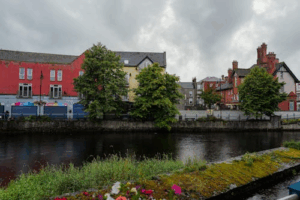
Mayo has no shortage of headline moments, but the memorable parts are often smaller. A quiet harbour with a story attached. A local viewpoint that explains a settlement pattern. A village where the conversation in a shop adds more than a guidebook paragraph ever could. We build in time for those discoveries, because heritage is not only what you can photograph. It is what you can understand.
Mayo can also work beautifully as part of a wider private itinerary. Many guests begin with a Meath-based day to ground themselves in Irish history, then add Dublin and Wicklow, and later head west when they want space and depth. The order matters because the early days give context that makes Mayo feel even richer.
County Mayo is ideal for travellers who want both beauty and meaning. The landscapes are striking, but the real reward is how easily Mayo invites questions about community, identity, and continuity. When we plan a day here, we focus on what matters to you, whether that is local heritage, big historic themes, or the personal pull of family links.
If you are tracing your Irish roots, Mayo often gives you the calm and clarity to join the dots without rushing. We also welcome visitors who are planning family history tours for people in Brisbane, where time on the ground matters because you want each day to count. You can explore our Tours to see what we offer, and how we can shape a private itinerary around your interests. If you would like us to plan your visit, please contact us.