
Ireland is one of those rare places where history doesn’t stay tucked away in museums. It sits quietly in stone circles at the edge of a farmer’s field, in ruined abbeys along the coast, and in the accents and stories still passed down in small villages.
For travellers who want more than a quick photo stop, history tours of Ireland offer a way to actually understand the island, not just see it. This guide walks through the ancient sites, layered histories, dramatic landscapes and lesser-known experiences that make Ireland genuinely rewarding to explore, along with practical guidance on choosing the regions and routes that fit your own interests best.
Whether you’re drawn to Celtic legend, famine history, coastal scenery or family genealogy, there’s a version of this island built specifically for you. History here doesn’t sit behind glass. It’s woven into everyday life, in field boundaries that follow ancient land divisions, in surnames still tied to specific townlands, and in stories neighbours still talk about events that happened generations before anyone alive today was born. Approaching Ireland with a bit of historical context transforms an ordinary drive through the countryside into something considerably more meaningful.
Ancient Ireland: Monuments Older Than the Pyramids
Long before castles or cathedrals, Ireland was home to sophisticated communities who left behind some genuinely astonishing structures. Newgrange, in County Meath, predates the pyramids of Giza and is aligned so precisely with the winter solstice that sunlight floods its inner chamber for just a few minutes each year.
Nearby, the Hill of Tara once served as the ceremonial seat of Ireland’s high kings, and walking its quiet grassy mounds today gives little hint of the political power once concentrated there. Understanding Celtic tribes in Ireland adds another layer entirely, since much of the island’s early history was shaped by rival kingdoms whose boundaries still echo in modern county lines. These sites reward a slow visit rather than a rushed one, ideally with a guide who can explain what the stones and mounds actually meant to the people who built them.
Loughcrew, a lesser visited passage tomb complex in County Meath, offers a similarly atmospheric experience without the crowds that Newgrange now attracts, and climbing to its hilltop cairns on a clear day remains one of the most underrated experiences in the entire country.

Medieval Castles and Walled Towns
Ireland’s medieval period left behind hundreds of castles, from grand fortresses like Kilkenny Castle to smaller tower houses scattered across the countryside. Many of these sites saw centuries of conflict between Gaelic clans, Anglo Norman settlers and later English forces, and the layered ownership often shows in the architecture itself.
Walled towns such as Derry offer a particularly vivid sense of this history, since their fortifications remain almost entirely intact. Exploring these sites as part of structured Ireland historical tours tends to add far more depth than visiting alone, since local guides can point out details easily missed, a defensive design choice here, a coat of arms there, that explain how a family or town actually survived through centuries of upheaval.
Many smaller tower houses, unlike their grander counterparts, remain in surprisingly good condition simply because they were too remote or too modest to attract attention during later conflicts, making them a genuinely unfiltered window into how ordinary landowning families once lived.

The Great Famine and Emigration History
No discussion of Irish history is complete without addressing the Great Famine, a period that reshaped the island permanently. Between 1845 and 1852, roughly a million people died and a further million emigrated, fundamentally altering Ireland’s population and its relationship with the rest of the world.
Understanding Irish potato famine immigration patterns helps explain why so many people today, particularly across North America, Britain and Australia, can trace ancestry back to this single devastating period. Visiting an Irish famine memorial Dublin site, such as the striking bronze figures along the quays, offers a quiet, sobering moment to reflect on what those years actually meant for ordinary families forced to leave everything behind.
Many emigrants left from ports that still exist today, and standing on the same quaysides their ships once departed from adds a physical, tangible dimension to a period that can otherwise feel abstract when read about from a distance.

Workhouses and Local Famine History
Beyond the well-known memorials, smaller sites across the country tell equally important stories. Learning Irish famine workhouse facts brings a different kind of clarity, since workhouses were where the poorest families turned when they had nowhere else to go, often as a last resort before emigration or death.
Several former workhouse buildings have been preserved or converted into local museums, and visiting one puts the scale of the famine into a far more human, local context than statistics alone ever could. Surviving admission registers from several workhouses have also proven invaluable for genealogical research, occasionally listing exact ages, home townlands and family circumstances that don’t appear anywhere else in the historical record.
Tracing Ancestry Through Ireland’s History
For many visitors, Irish history isn’t just something to observe, it’s personal. If your own family left during the famine years or in the decades that followed, genealogy research in Ireland can help fill in gaps that family stories alone can’t answer. Parish registers, land valuations and passenger lists together often reveal exactly when and why a family made the decision to leave.
Irish ancestry research frequently starts with a single surname and a rough sense of a county, and grows from there into a fuller picture of where a family actually lived, worshipped and worked before emigration changed everything. Church records in particular can be surprisingly detailed, sometimes noting witnesses at baptisms or marriages who turn out to be relatives, neighbours or future in laws, quietly expanding a family tree in directions a simple birth record never could.

Genealogy Research Across the North
Family history research looks a little different across the border, largely due to differing record systems. Northern Ireland genealogy research often draws on both Irish and British archives, since the region’s administrative history sits across two systems. Professional genealogist in Northern Ireland can be particularly useful here, since navigating both record sets without local expertise can be genuinely difficult for first time researchers.
More broadly, genealogy in Northern Ireland often uncovers strong Presbyterian and Ulster Scots connections, especially for families with roots in counties like Antrim, Down or Derry, adding a distinct historical thread that differs meaningfully from research further south. Land and estate records from this region can also be unusually detailed, since large landholdings were common, and tracing a family through tenancy records occasionally reveals precise dates and circumstances that parish registers alone don’t capture.
Regional Highlights Worth Building a Trip Around
Certain counties offer particularly rich combinations of history and genealogy. Donegal family history research benefits from strong surviving parish records and a well documented emigration trail, particularly to Scotland. Mayo family genealogy work frequently connects to famine history directly, since County Mayo was among the hardest hit regions in the entire country.
Meanwhile, Tipperary family history research tends to uncover detailed land and estate records thanks to the county’s agricultural history. Building a trip around one or two of these regions, rather than trying to cover the whole island, tends to produce a far richer and more personally meaningful experience.
It’s also worth remembering that county boundaries themselves have shifted over the centuries, so a family recorded in one county on an early document might appear under a neighbouring county’s records later on, which is exactly the kind of detail an experienced local researcher tends to catch quickly.
Hidden Landscapes Beyond the Main Routes
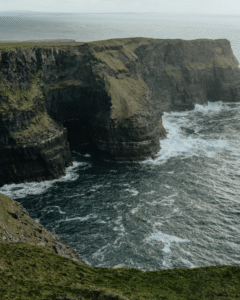
While the Wild Atlantic Way and the Ring of Kerry rightfully draw crowds, some of Ireland’s most memorable landscapes sit just off the main routes. The Beara Peninsula offers similar drama to Kerry with a fraction of the traffic. The Slieve League cliffs in Donegal rival the Cliffs of Moher in height, without the crowds.
Inland, the Burren’s strange lunar like limestone landscape supports rare Arctic and Mediterranean plants growing side by side, a genuine ecological oddity that history and nature enthusiasts alike find fascinating. Combining these hidden landscapes with structured Ireland history tours tends to reward travellers who want depth over ticking off famous names.
Even the naming of these landscapes carries history, since many Irish place names are anglicised versions of older Gaelic terms describing a physical feature, a saint, or an event tied to the land itself, and understanding even a handful of these translations changes how a landscape reads entirely.
Bringing It All Together with Guided Exploration
With so many layers of history, from ancient monuments through medieval conflict to famine era emigration and beyond, it’s easy to see why self guided trips often only scratch the surface. Ancestry travel tours built around genuine historical and genealogical expertise let travellers move beyond surface level sightseeing into a much deeper understanding of the places they’re visiting. Whether your interest lies in Celtic tribes in Ireland, famine history, or tracing your own family line, the right guidance turns scattered sites into a coherent, meaningful story.
Living History: Festivals, Language and Local Memory
History in Ireland isn’t confined to sites you visit and then leave behind. It continues in the Irish language, still spoken daily in Gaeltacht regions along the west coast, and in place names that have never been translated into English at all.
Local festivals often mark historical events long forgotten outside the immediate area, a battle, a saint’s feast day, a harvest tradition tied to older pre-Christian customs. Spending time in a small town during one of these events, even briefly, offers a kind of insight no museum plaque can quite replicate. Local storytelling, too, remains a genuinely living tradition, with older residents in many areas still able to recount family and townland history passed down verbally across several generations, often filling in details that written records left out entirely.
Your Next Step
Ireland’s history is vast, layered and deeply personal for millions of people around the world, and we’d love to help you explore the parts of it that matter most to your own story. Our team at Royal Historical Tours builds history tours of Ireland around your specific interests, whether that means walking ancient sites tied to Celtic tribes in Ireland, standing at an Irish famine memorial during your trip to Dublin that connects to your own family’s emigration story, or digging into genealogy research in Ireland alongside professional researchers who know exactly where to look.
We also arrange dedicated Ireland genealogy research for families with roots across the country, drawing on both Irish and British archival sources. From ancestry travel tours through hidden landscapes to focused, one on one research sessions, every itinerary we create is shaped entirely around you. Get in touch today and let’s start building a trip that turns Ireland’s long, complicated history into something you can actually walk through, touch and understand.
Frequently Asked Questions
- What makes history tours of Ireland different from a standard sightseeing trip?
History tours of Ireland focus on context and depth, connecting ancient monuments, medieval sites and famine history through expert guides, rather than simply visiting landmarks without understanding their significance.
- How reliable are records used in genealogy research in Ireland?
Parish registers, land valuations and passenger lists vary in completeness by region, but many survive well, particularly from the 1800s onward, making Irish ancestry research genuinely achievable for most family lines.
- Is Northern Ireland genealogy research different from research in the Republic?
Yes. Genealogy for Northern Ireland often involves both Irish and British archives, and a genealogist in Northern Ireland can navigate these dual record systems far more efficiently than a first time researcher.
- Where can I learn more about Irish potato famine immigration?
County heritage centres, the Irish famine memorial’s Dublin site, and several preserved workhouse buildings across the country all offer detailed insight into famine era emigration and its lasting impact on Irish communities.
- Which counties are best for Donegal family history or Mayo family genealogy research?
Both counties hold strong surviving parish records. Donegal is known for its Scottish emigration trail, while Mayo’s records frequently connect directly to famine history and mass emigration during the 1840s.