
The Republic of Ireland packs an extraordinary amount of history into a relatively compact area, which is exactly what makes it so rewarding to explore properly rather than rushing between a handful of famous names.
The best history tours of Ireland tend to move beyond Dublin alone, weaving together medieval cities, ancient monuments, and dramatic coastlines into a single, coherent journey. Understanding what each region actually offers helps visitors plan a trip that genuinely reflects what they want to see, rather than simply following whatever itinerary a coach company happens to run. This guide moves roughly south and west, tracing a route that many travellers find works well across a week or two in the country.
Dublin: The Natural Starting Point
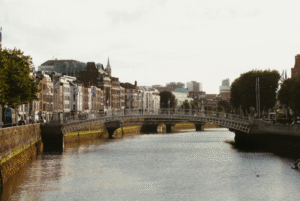
Dublin remains the natural starting point for most visitors, and for good reason. The city blends Georgian elegance with Viking foundations, literary heritage, and a genuinely walkable centre that rewards exploration on foot. Trinity College, Dublin Castle, and the cobbled lanes of Temple Bar all sit within easy reach of one another, while the Guinness Storehouse and Kilmainham Gaol offer two very different windows into Ireland’s industrial and political history. A driving tour of Dublin, rather than a standard walking circuit, allows visitors to cover considerably more ground, taking in neighbourhoods and sites that most short visits never reach, from the quiet Georgian squares south of the river to the historic Liberties district.
County Meath: Ireland’s Ancient Heart
County Meath, often overlooked by first-time visitors in favour of Dublin alone, holds some of Ireland’s most significant ancient sites within a short drive of the capital. Newgrange, the UNESCO World Heritage Site predating the Egyptian pyramids by several centuries, anchors the Boyne Valley’s extraordinary concentration of Neolithic monuments.
The Hill of Tara, once the seat of Ireland’s ancient high kings and a key gathering place for the Celtic tribes in Ireland, and Trim Castle, the largest Anglo-Norman castle in Ireland, round out a region that offers genealogy research connections for many visiting families alongside its archaeological significance. Mellifont Abbey and Monasterboice add a further layer of medieval monastic history to the same compact area, making Meath one of the most historically dense counties anywhere on the island.
Kilkenny: Ireland’s Medieval Capital
Kilkenny earns its reputation as Ireland’s medieval capital almost by default, with Kilkenny Castle anchoring a city centre built almost entirely around its Norman and medieval past. The narrow medieval streets, known locally as slips, wind between buildings that have stood since the thirteenth century, while Kilkenny Cathedral and the surrounding ecclesiastical sites round out a city that rewards slow, deliberate exploration.
The city’s reputation as a centre for craft and artisan food has grown considerably in recent years, adding a contemporary layer to its considerable medieval charm, and a single afternoon rarely feels like enough time to do the city justice.
Cork and Kerry: Food, Coast, and Drama
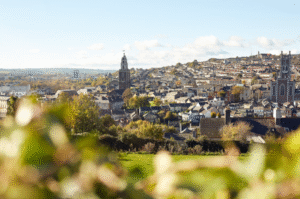
Cork brings an entirely different energy to the southern itinerary, anchored by a thriving food scene and a coastal character distinct from anywhere else in the country. The English Market remains a genuine working market rather than a tourist attraction, while the surrounding harbour towns offer their own quieter appeal. County Kerry, further west, is where the landscape becomes genuinely spectacular. The Ring of Kerry and the Dingle Peninsula both deliver the kind of dramatic coastal scenery that draws visitors back to Ireland again and again, with mountains rising directly from the Atlantic in places that feel almost otherworldly, particularly in the soft light of early morning or late evening.
Waterford: Ireland’s Oldest City
Waterford holds the distinction of being Ireland’s oldest city, founded by Viking settlers over a thousand years ago, and that Viking heritage remains genuinely visible throughout the city centre. Reginald’s Tower, the oldest civic building in Ireland, anchors the Viking Triangle, a compact historic quarter that traces the city’s development from Norse settlement through Norman conquest to its emergence as a major trading port.
For visitors with genealogical interests, Waterford’s long history as a port city makes it a meaningful stop for anyone tracing their Irish roots through the south-east of the country, where many emigrant families departed from in the nineteenth century. Many descendants of these families now choose to hire an Irish genealogist before travelling, so the Waterford stop carries personal meaning rather than simply historical interest.
The Cliffs of Moher: Ireland’s Iconic Edge
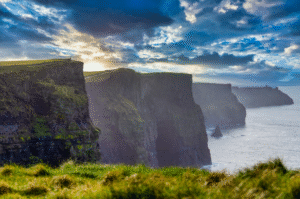
The Cliffs of Moher remain one of Ireland’s most photographed natural landmarks, and for visitors travelling through the southern and western counties, they represent an essential stop on any well-planned itinerary. Rising over 200 metres above the Atlantic, the cliffs stretch for roughly eight kilometres along the Clare coastline, offering views that change dramatically depending on weather and time of day. Visiting outside the peak midday hours, when coach traffic is heaviest, tends to deliver a considerably more atmospheric experience of one of Ireland’s genuinely iconic sights, with far fewer crowds blocking the best vantage points along the cliff path.
Let Us Connect These Destinations for You
At Royal Historical Tours, we design history tours of Ireland that connect the Republic’s most significant destinations into a single, considered journey rather than a checklist of disconnected stops.
Based in County Meath’s Boyne Valley, our certified guides bring genuine local expertise to sites including Newgrange, Trim Castle, and the Hill of Tara, while our private touring approach allows us to extend itineraries to Kilkenny, Waterford, Cork, Kerry, and the Cliffs of Moher depending on your interests and timeframe. Every tour is private, picked up and dropped off at your hotel, and built entirely around your party.
We also offer Ireland historical tours with a genealogical focus for visitors tracing family roots, and we design custom family tours of Ireland for multigenerational groups with different interests. Whether you are visiting for the history, the scenery, or both, we tailor each day to make the most of southern Ireland’s remarkable depth.
Contact Royal Historical Tours today to start planning your journey through Ireland’s most memorable destinations.