
Ireland’s reputation as the Land of Saints and Scholars is more than a poetic description. It reflects a period when monasteries became important centres of religious life, education, artistic achievement and manuscript production. Their influence extended beyond the island, connecting Irish religious communities with wider parts of Europe.
The story is not quite as simple as the familiar phrase suggests. Medieval Ireland was a complex society shaped by local kingdoms, religious change, conflict and cultural exchange. Yet the surviving monasteries, carved crosses and illuminated manuscripts offer compelling evidence of the learning and craftsmanship that flourished during the early medieval period.
For visitors interested in history tours of Ireland, these places reveal a fascinating side of the country’s past, one that goes far beyond castles and battlefields.
How Ireland Earned Its Reputation
Christianity developed in Ireland during the early medieval period, traditionally associated with figures such as St Patrick. Over time, monasteries emerged across the island, serving not only as religious communities but also as places of learning, manuscript production and skilled craftsmanship.
Monks studied religious texts, copied manuscripts and preserved written knowledge.
Some monastic communities became influential centres that attracted students and religious figures from elsewhere in Europe.
The phrase “Land of Saints and Scholars” reflects this reputation, although it should not be taken to mean that every part of Ireland experienced the same level of learning or that the island was separate from the wider political and cultural developments of medieval Europe.
Research by Maynooth University explores how Ireland became associated with its saints and examines the historical sources used to understand their lives. These include saints’ lives, religious biographies often written long after the individuals they describe had died.
Such sources are valuable, but they must be read carefully. They often combine historical information with religious storytelling and accounts intended to demonstrate a saint’s holiness.
Monasteries Were More Than Places of Worship
A medieval monastery could be a substantial community with buildings dedicated to worship, accommodation, work and study. Depending on its size and importance, it might also be connected to local trade, agriculture and political power.
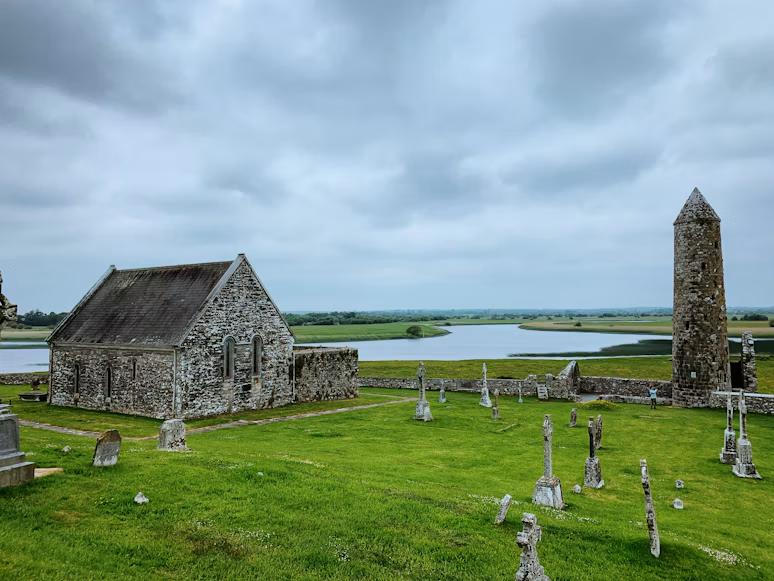
Clonmacnoise, on the banks of the River Shannon in County Offaly, illustrates this wider role. Founded by St Ciará n in the sixth century, it developed into an important religious and cultural centre. Its location beside a major waterway also connected it with routes used for travel and trade.
Today, visitors can explore the remains of churches, round towers, high crosses and carved grave slabs. These structures tell stories about religious beliefs, artistic skill and the people who supported the monastery over several centuries.
The National Monuments Service guide to Clonmacnoise explains the site’s historical importance and its role as a centre of learning, trade and craftsmanship.
Clonmacnoise also demonstrates that religious communities were not isolated from conflict. The site experienced raids and political changes over time, reflecting the shifting circumstances of medieval Ireland.
The Book of Kells and the Art of Preserving Knowledge
One of the best-known examples of Ireland’s manuscript tradition is the Book of Kells, an elaborately decorated copy of the four Gospels generally dated to around the late eighth or early ninth century.
Its pages combine carefully written text with intricate decoration, including interlacing patterns, animals and complex ornamental designs. Producing such a manuscript required considerable skill, time and materials. Parchment had to be prepared, text copied and illustrations created by hand.
Manuscripts were important for religious study and worship, but their decoration also reflected the resources and artistic abilities of the communities that produced them.
The Heritage Ireland article on the Irish School of Illumination explains how manuscript production developed in major monastic centres, including Kells and Clonmacnoise. These communities helped sustain traditions of writing, calligraphy and artistic decoration across generations.
The Book of Kells is associated with the monastery at Kells in County Meath, although its precise place of production remains a subject of scholarly discussion.
The monastery itself was established by monks connected with Iona, an island off Scotland’s western coast.
For travellers exploring Ireland’s rich heritage, the story offers an opportunity to connect a celebrated manuscript with the religious communities and artistic traditions behind it.
Where Can You Explore This History Today?
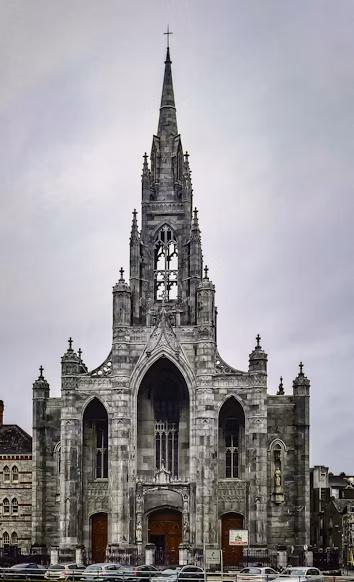
The Republic of Ireland contains many places where the legacy of early Christianity and medieval learning remains visible. Each site offers a different perspective on the relationship between religion, art and everyday life.
County Meath: Kells has a strong connection with the Book of Kells and the wider history of monastic learning. Nearby, the landscape also contains prehistoric and medieval landmarks, making the county particularly rewarding for visitors interested in different layers of Irish history.
County Offaly: Clonmacnoise offers an opportunity to walk among the remains of a major early Christian settlement and examine its crosses, churches and round towers.
County Kildare: Kildare is closely associated with St Brigid and the development of an important religious community. Its heritage offers another perspective on the influence of early Christian institutions.
County Clare: The wider region’s religious heritage sits alongside its dramatic natural landscape and historic settlements. Visitors can combine cultural stops with coastal exploration and learn how different periods shaped the region.
These destinations can be incorporated into Ireland heritage tour packages or a self-drive itinerary, depending on how much time you have and which aspects of history interest you most.
Were Irish Scholars Really Travelling Across Europe?
Irish religious figures and scholars did travel beyond Ireland, establishing connections with communities elsewhere in Europe. Some became known for their missionary work, teaching and the founding or support of religious institutions.
These journeys were part of a wider network of movement involving religious communities, political relationships and cultural exchange. It would be misleading to suggest that Ireland alone preserved learning during the early medieval period, but its monasteries played a significant role in the transmission of religious texts and artistic traditions.
The phrase “saints and scholars” therefore describes a real historical legacy, but one best understood within its broader European context.
The surviving evidence also reminds us that medieval learning was not identical to modern education. Monastic study was closely tied to religion, scripture, learning Latin, and the needs of the Church. Over time, the range of written works produced and preserved in Ireland expanded, including histories, genealogies, poetry, and other literary traditions.
What Can These Places Tell Modern Visitors?
Visiting a monastery or historic religious site is more rewarding when you understand what you are looking at. A round tower was not simply an architectural curiosity; it formed part of a wider religious landscape. A carved cross was both an artistic achievement and an expression of Christian belief. A manuscript represented years of skilled labour and the priorities of the community that created it.
This is why guided castle tours in Ireland and other history-focused experiences can benefit from knowledgeable interpretation, even when the destination is a monastery rather than a castle. Understanding the people, beliefs and political circumstances behind a site brings the physical remains to life.
For visitors who want to explore several periods of Irish history, a route through Meath and neighbouring counties can combine prehistoric monuments, early Christian heritage and medieval fortifications. The result is a journey through different chapters of the country’s past rather than a collection of disconnected attractions.
Discover Ireland’s History with Us
At Royal Historical Tours, we believe exploring Ireland is even more meaningful when you understand the stories behind its landscapes and historic sites. Whether you are interested in private castle tours, early Christian heritage, medieval history, or the places connected to your own family, we can help you plan a journey that reflects your interests.
Contact us to plan your Irish heritage experience and discover the people, places and traditions that have shaped Ireland through the centuries.