
Could a single record take us from an overseas family story to an actual place in Ireland?
For many families, tracing your Irish roots begins with little more than a surname, an immigration record and a story passed down through generations. That can feel frustrating when the goal is to identify an original Irish homestead.
During the Great Irish Famine, approximately 1 million people died, and another 1 million were lost through emigration, creating family connections between Ireland and communities around the world.
The key is to work backwards carefully. Our Irish genealogy research guide explains how to move from overseas records to an Irish county, parish and, when the evidence allows, a specific townland.
Start With Everything You Already Know
Before searching Irish records, gather information from records held in the country where your ancestor lived.
Look for:
- Full name and possible spelling variations
- Birth, marriage and death dates
- Names of parents, spouses and children
- Immigration or naturalisation records
- Census entries
- Obituaries and cemetery records
- Religious affiliation
- Occupation
- Names of relatives or witnesses
The National Archives of Ireland recommends having the family name, parish or townland and approximate period when the person lived as key details for family history research.
Even an approximate location can make Irish ancestry research considerably more focused.
Understand County, Parish and Townland
These three terms are easy to confuse, but they serve different purposes.
- County:A broad administrative area such as Galway, Mayo, Meath or Donegal.
- Parish:A smaller geographical and often religious area within a county. Church records are frequently organised by parish.
- Townland:A much smaller named area that can identify where a family actually lived. Irish church records use a structure that includes parish and townland or street information.
If a document only gives us a county, we should not assume that it identifies an ancestral home. The next objective is to establish the parish and then search for the townland.
Use Civil Records to Confirm Family Connections
Birth, marriage and death records can provide valuable evidence. The official Irish Genealogy website allows searches by name, location, year and event type, including births, marriages, deaths, baptisms and burials.
A marriage record, for example, may help connect two surnames and point towards a particular area. A birth record can help establish parents, while a death record may provide an age or residence that helps distinguish between people with the same name.
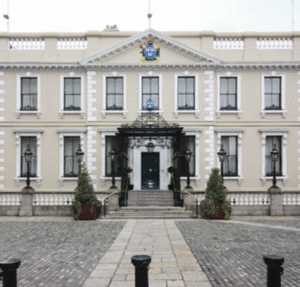
Could the next step be seeing the place for ourselves?
Royal Historical Tours can assist with genealogy research in Ireland for people who want to connect documentary research with the places associated with their family.
For anyone tracing their Irish roots, contacting Royal Historical Tours can help turn scattered records into a clearer understanding of an ancestral area and, where evidence supports it, an original Irish homestead.