
How much of Dublin’s history can we miss when we only visit its most famous landmarks?
Dublin’s historic story reaches back more than 1,000 years at the site now associated with Dublin Castle, where a Viking settlement preceded the medieval castle built in the thirteenth century. That gives us a sense of how much history can sit beneath a modern city.
Dublin’s hidden history becomes easier to appreciate when we look beyond the most familiar attractions. A little planning can connect medieval sites, political landmarks, religious buildings and places associated with emigration into one coherent day.
Begin With the Medieval City
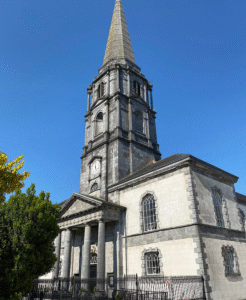
The area around Dublin Castle and Christchurch contains layers from different periods.
Dublin Castle stands on a site associated with the Viking Age, while its medieval development reflects the arrival of Anglo-Norman power.
Rather than treating each building as an isolated attraction, we can ask:
- What stood here before the current structure?
- Who controlled this part of the city?
- How did Dublin’s boundaries change?
- What evidence remains from earlier periods?
Those questions turn a walk through central Dublin into a history lesson connected to physical places.
Look Beyond the Main Visitor Routes
Some of Dublin’s historical value comes from locations that may not feature prominently in a short city itinerary.
The Docklands, for example, provides an important connection to nineteenth-century emigration. The Famine Memorial on Custom House Quay commemorates people forced to leave Ireland during the Great Famine. Dublin City Council notes that the memorial was created by sculptor Rowan Gillespie and presented to the city in 1997.
A stop here can add social history to a day otherwise focused on architecture and famous institutions.
See Viking Dublin in a Wider Context
Dublin’s Viking story is not simply about raids.
Archaeological evidence from Dublin includes houses, workshops, walkways, property boundaries and objects connected with manufacturing and trade. The National Museum of Ireland notes that Dublin developed into an important trading town in the western Viking world.
That evidence gives us a more complete way to understand the city. We can consider commerce, craftsmanship, settlement and daily life alongside conflict.
Connect Places Instead of Collecting Attractions
A useful way to approach Dublin’s hidden history is to group sites by historical theme.
Medieval Dublin
- Dublin Castle
- Christchurch area
- Ancient city walls and surviving medieval features
Viking Dublin
- Areas associated with the early settlement
- Archaeological sites and museum collections
- The River Liffey and the development of trade
Nineteenth-Century Dublin
- Custom House area
- Famine Memorial
- Historic streets connected with emigration and urban development
This approach gives each stop a reason for being on the itinerary.
Let the City Tell a Longer Story
What if a familiar Dublin street is actually part of a much older story?
Royal Historical Tours offers historical tours in Ireland that can help visitors connect individual locations with wider Irish history.
For travellers interested in history tours of Ireland, Ireland historical tours or cultural tours in Ireland, contacting Royal Historical Tours can provide a way to experience Dublin through connected stories rather than a checklist of attractions.