
What if the most revealing parts of Dublin’s history are not the landmarks that appear on every visitor itinerary, but the streets, doorways and monuments that are easy to walk past?
Dublin’s story stretches from Viking settlement and medieval trade to famine, political upheaval and changing urban life. In fact, Dublin became the most important trading town in the western Viking world.
For us, this is why historical tours in Ireland should go beyond famous landmarks. With the right historical context, an ordinary street can become evidence of another era.
In this guide, we look at lesser-known corners of Dublin and the stories they preserve, from medieval churches and old residential streets to famine memorials and the traces of Viking Dublin.
Start With the Streets That Shaped Medieval Dublin
Dublin does not always announce its oldest history with imposing monuments. Sometimes, it is built into the route of a street.
Several modern streets follow paths that have existed in some form for centuries. Dublin City Council explains that the city’s street layouts were influenced by practical historical features, including Viking river crossings, streams and routes created for horses and carriages.
This gives visitors a different way to read Dublin.
Instead of seeing a street simply as a way to reach the next attraction, we can ask:
- Why does the street run in this direction?
- What stood here before the modern buildings?
- Who used this route centuries ago?
- Was it connected to trade, religion, government or residential life?
The answers can reveal layers of Dublin that are easy to miss during a conventional sightseeing visit.
St Audoen’s Church and the Medieval City
Close to High Street, St Audoen’s Church offers one of the clearest reminders that medieval Dublin still exists beneath and around the modern city.
St Audoen’s Church is the only remaining medieval parish church in Dublin. The church dates back to the Norman period and was deeply connected with civic and religious life.
Its importance becomes even clearer when we consider the people who gathered there. Guilds, merchants, wealthy families and ordinary parishioners all formed part of its long history.
The surrounding area also tells us something about medieval Dublin’s social structure. St Audoen’s was not an isolated religious building. It stood within a busy walled city where trade, politics, religion and everyday life were closely connected.
For visitors interested in Ireland historical tours, this is precisely the kind of location that rewards attention to detail. The building may be quieter than Dublin’s major attractions, but its history reaches deep into the city’s medieval past.
Wood Quay and the Viking City Beneath Modern Dublin
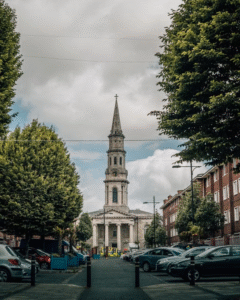
Between 1974 and 1981, major archaeological excavations took place beneath the Wood Quay area beside the River Liffey. The National Museum of Ireland describes the excavations as one of the largest urban archaeological projects in Europe. Archaeologists found remarkably preserved streets, buildings and objects that provided evidence of daily life in medieval Dublin.
These discoveries help us understand that Viking Dublin was much more than a settlement of raiders.
The archaeological evidence points to:
- Craft production
- Manufacturing
- International trade
- Residential buildings
- Workshops
- Maritime activity
- Commercial exchange
That changes how we think about the city’s origins. Dublin developed as a working town connected to wider trading networks, and its location beside the Liffey was central to that development.
When we walk through the modern city, it is worth remembering that some of the ground beneath our feet once contained homes, workshops and streets belonging to people living more than a thousand years ago.
Henrietta Street and the Changing Face of Dublin
History is not only about kings, battles and political leaders. It is also about where people lived.
Henrietta Street provides a remarkable example. The street was developed in the 18th century for wealthy residents and became one of the most important Georgian residential areas in Dublin. Over time, however, its fortunes changed dramatically.
Today, 14 Henrietta Street tells the story of that transformation. Dublin City Council describes the building as a social history museum connecting more than 300 years of urban life, from its Georgian beginnings to its later existence as a tenement.
This is one of the most valuable perspectives we can gain from cultural tours in Ireland. A historic building does not represent just one period.
A house can reveal:
- The wealth and ambitions of its original residents.
- Changes in Dublin’s population.
- The growth of tenement housing.
- Changing ideas about domestic life.
- The experiences of families who later called the same building home.
That makes places such as Henrietta Street especially useful for understanding social history rather than simply architectural history.
See Dublin as a City of Layers
What happens when we stop looking at Dublin as a collection of attractions and start seeing it as a city built layer upon layer?
The answer is that familiar places can begin to feel completely different.
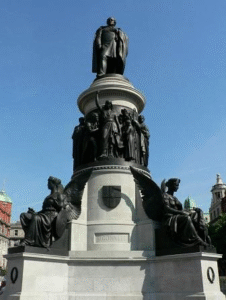
From the medieval world around St Audoen’s to the archaeological evidence of Viking Dublin, from the changing fortunes of Henrietta Street to the Irish famine memorial in Dublin, these stories reveal a capital shaped by ordinary people as much as famous figures.
For visitors planning historical tours in Ireland, this broader approach can add depth to every day spent in the capital. It can also provide a stronger connection between Dublin and the wider story told through Ireland historical tours.
At Royal Historical Tours, we bring this kind of historical context to the experience of visiting Ireland. Our focus is on helping travelers connect places with the people, events and stories that shaped them.
If you want to see Dublin beyond its most familiar attractions, contact Royal Historical Tours about a Dublin’s hidden sites tour and discover the lesser-known stories that can give the city a much richer sense of place.