
What if the story of County Meath could not be understood through Newgrange alone? The county contains prehistoric tombs, royal sites, monastic centers and medieval fortifications that span thousands of years. The Brú na Bóinne World Heritage property alone covers 780 hectares and includes around 90 recorded monuments.
For us at Royal Historical Tours, this is what makes an Ireland heritage trip so rewarding. Rather than focusing on one famous monument, we can follow the connections between places and periods, giving travelers a fuller understanding of Ireland’s past.
In this guide, we look at the Hill of Tara, the Boyne Valley, Trim Castle, Loughcrew and other sites that give County Meath its remarkable historical character.
The Boyne Valley and the World of Newgrange
Newgrange may be the most recognizable ancient monument in County Meath, but it forms only part of a much larger archaeological story.
The Brú na Bóinne complex includes Newgrange, Knowth and Dowth, along with numerous additional prehistoric monuments. UNESCO describes the area as one of Europe’s most important concentrations of prehistoric megalithic art, with monuments serving social, religious and funerary purposes.
Newgrange was constructed during the Neolithic period, when communities were already capable of organizing enormous building projects and creating sophisticated ceremonial monuments. Its famous passage and chamber are aligned with the winter solstice sunrise, giving the structure a powerful connection to seasonal cycles and ancient beliefs.
Yet Knowth and Dowth add important dimensions to the story.
- Knowthcontains numerous examples of Neolithic art carved into its stones.
- Dowthprovides evidence of later activity, including medieval remains.
- Newgrangedemonstrates the remarkable architectural and ceremonial achievements of Neolithic communities.
This continuity matters when considering County Meath ancient history tours. We are not simply visiting isolated ruins. We are seeing evidence of communities that repeatedly returned to significant places and gave them new meanings over many generations.
Hill of Tara and the Power of Kingship
From the Boyne Valley, we can turn toward one of Ireland’s most important royal sites: the Hill of Tara.
Tara was significant from the Late Stone Age, but its importance grew considerably during the Iron Age and Early Christian period. It became associated with the High Kings of Ireland and with ceremonies connected to kingship.
The site contains numerous monuments, including the Mound of the Hostages, the Fort of the Kings, the Royal Seat and the Lia Fáil, traditionally associated with the inauguration of kings.
The Mound of the Hostages is particularly important because it takes us back thousands of years before the medieval period. Heritage Ireland identifies it as a roughly 5,000-year-old passage tomb containing evidence of human burial.
This gives us an opportunity to consider how the meaning of Tara changed over time. What began as a prehistoric ceremonial and funerary center later became closely connected with royal authority and Irish tradition.
For anyone researching County Meath Ireland genealogy, Tara can also provide valuable historical context. Family history does not exist separately from the places where generations lived, worshiped, governed and gathered. Understanding the county’s ancient centers can add depth to a family’s connection with Meath.
Trim Castle and the Arrival of Medieval Power
County Meath’s story does not stop with prehistoric monuments or legendary kings.
At Trim, the architecture changes dramatically. Instead of earthen banks and passage tombs, we encounter thick stone walls, towers, defensive structures and a medieval castle.
Trim Castle was developed under Hugh de Lacy and his successors and took approximately 30 years to build. Heritage Ireland identifies it as the largest Anglo-Norman fortification in Ireland.
Its location beside the River Boyne is also significant. Rivers were important routes for settlement, communication, agriculture and military strategy. The castle therefore gives us a very different view of how power operated in medieval Ireland.
When we include Trim in historical tours in Ireland, it helps create a clear contrast:
- Newgrangeshows the ceremonial achievements of prehistoric communities.
- Tararepresents ancient kingship and political tradition.
- Trim Castlereflects the transformation of power during the Anglo-Norman period.
Together, these places show that County Meath’s importance did not belong to one particular era.
Loughcrew and the Wider Prehistoric Story
Another important stop is Loughcrew, near Oldcastle.
The Loughcrew cairns are a group of Neolithic passage tombs dating to around 3000 BC, with examples of prehistoric art and ceremonial architecture.
Loughcrew helps broaden our understanding of County Meath beyond the Boyne Valley. Ancient communities were active across the county, and their monuments reveal recurring interests in burial, ceremony, astronomy and the relationship between people and their surroundings.
For travelers interested in County Meath ancient history tours, visiting more than one prehistoric site can make these themes easier to recognize. Differences between the monuments can be just as informative as their similarities.
From Ancient Tombs to Medieval Towers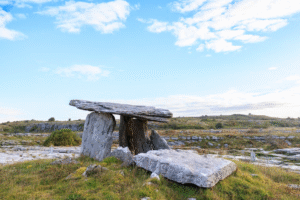
So, what do we really see when we look beyond Newgrange?
We see a county where thousands of years of Irish history remain connected through physical places. The Boyne Valley introduces us to Neolithic communities and monumental burial traditions.
Tara brings us into the world of kingship and early Irish tradition. Loughcrew expands the prehistoric story, while Trim Castle demonstrates the dramatic changes brought by medieval political power.
That is why we encourage travelers to consider more than a single famous monument when planning Ireland historical tours. A fuller itinerary can reveal how different periods relate to one another and why County Meath holds such an important place in Irish history.
At Royal Historical Tours, we create opportunities for travelers to experience these connections through thoughtfully planned historical tours in Ireland. Whether your interest lies in prehistoric Ireland, medieval castles or County Meath Ireland genealogy, we can help you build a richer understanding of the places and stories that shaped the county.
Contact Royal Historical Tours to discuss your Ireland heritage trip and discover how a carefully planned visit can bring County Meath’s many historical chapters together.