
What happens when a new faith enters a society with its own beliefs, stories, traditions, and artistic language? In Ireland, Christianity did not simply replace an earlier way of life.
It gradually became part of the culture, education, art, politics, literature, and community life that helped shape Ireland’s rich heritage. The National Museum of Ireland notes that Irish people were learning about Christianity more than 1,500 years ago, a reminder of just how deeply rooted Christian history in Ireland has become.
For us, understanding this history adds meaning to historic places that can otherwise appear to be simply old ruins. From monasteries and high crosses to medieval churches, religious sites tell a story of belief, learning, craftsmanship, and community. We can also connect Christian heritage with other historical experiences, including Newgrange Megalithic Tomb trips, Medieval Museum tours, Reginalds Tower tours, and guided castle tours in Ireland.
Here is how Christianity developed in Ireland, the figures who helped spread it, the monasteries that became centers of learning, and the ways Christian traditions continue to influence Irish culture.
The Arrival of Christianity in Ireland
Christianity reached Ireland gradually rather than through one single event. Early Christian communities were already present before the figure most closely associated with Ireland’s conversion, St. Patrick, became prominent.
Patrick’s story has become central to Irish identity. According to his own writings, he had been taken to Ireland as a young captive before later returning as a missionary. His work helped establish Christian communities, and his name became associated with Ireland across centuries of religious and cultural tradition.
Yet Patrick was not alone.
Other important figures included St. Brigid of Kildare and St. Columba, also known as Colum Cille. Their traditions became connected with major religious centers and helped Christianity spread through different parts of Ireland. The National Museum of Ireland identifies Patrick, Brigid, and Columba among the saints associated with teaching Christianity and establishing religious communities.
Monasteries Became Centers of Irish Life
Early Irish monasteries were far more than places for prayer. They could become centers of:
- Religious teaching
- Manuscript production
- Artistic work
- Metalworking
- Scholarship
- Community activity
- Political influence
Monastic settlements often attracted people beyond the religious community itself. Some grew into substantial settlements, connecting spiritual life with education, commerce, craftsmanship, and local authority.
Clonmacnoise provides a particularly powerful example. Founded by St. Ciarán beside the River Shannon, the monastery became a major center of learning and attracted students from across Europe. Its surviving remains include churches, round towers, high crosses, and numerous early Christian graves.
Glendalough offers another important example. Associated with St. Kevin, the monastic settlement became a major religious center in medieval Ireland. Its surviving churches, round tower, grave markers, and other remains allow us to see how religious communities developed around places associated with prayer and retreat.
When we visit sites such as these, the ruins become much easier to understand when we consider the people who lived, studied, prayed, worked, and created art within them.
Saints Who Shaped Christian Ireland
Ireland’s saints were not simply religious figures remembered in church tradition. Their stories became closely connected with local places, communities, festivals, folklore, and family traditions.
St. Patrick
Patrick became Ireland’s most internationally recognized saint. His feast day remains a major cultural occasion, celebrated in Ireland and around the world. The National Museum of Ireland notes that traditions connected with St. Patrick’s Day have developed over centuries, combining religious observance with wider folk customs.
St. Brigid
Brigid became associated with Kildare and with a long tradition of religious devotion and community life. Her story remains deeply connected with Irish folklore, seasonal customs, and local identity.
St. Columba
Columba, or Colum Cille, became one of the major missionary figures associated with Irish Christianity. His reputation extended beyond Ireland, linking Irish monastic traditions with Christian communities in Britain and beyond.
Together, these figures demonstrate that Christian history in Ireland was shaped by many people rather than one missionary alone.
High Crosses and the Language of Christian Art
One of the most recognizable expressions of early Irish Christianity is the high cross. These monumental stone carvings combined Christian themes with the artistic traditions of early medieval Ireland.
The crosses could depict biblical scenes, figures, symbols, and decorative patterns. They were not simply religious markers. They communicated stories to communities and reflected the skills and resources available to major monastic centers.
Heritage Ireland identifies the high cross tradition as a major achievement of early medieval Irish art, with examples associated with places such as Monasterboice and Clonmacnoise.
The artistic legacy extended to manuscripts and metalwork. Monastic communities helped create a literate culture in which Latin, Irish, storytelling, poetry, and visual art interacted. Manuscripts and religious objects became important expressions of this culture.
Christian Sites Worth Connecting With Irish History
For anyone interested in Christian history in Ireland, several places offer particularly meaningful historical context.
Clonmacnoise
We can see how a monastery became a center of religion, scholarship, art, and community life.
Glendalough
This Wicklow site helps us understand the traditions surrounding St. Kevin and the development of a major monastic settlement.
Monasterboice
Its round tower and high crosses provide an impressive example of Irish monastic architecture and stone carving.
Rock of Cashel
This historic site connects religious buildings with royal and political history, making it useful for understanding how Christianity became connected with power and authority.
Let the Stones Tell the Story
What can an ancient monastery tell us that a history book cannot?
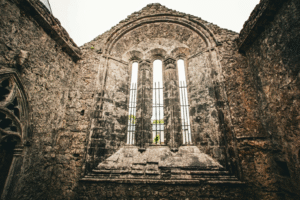
For us, the answer lies in the physical connection between people and place. A worn cross, a ruined church, a round tower, or a monastery wall can show how generations expressed faith, created communities, preserved knowledge, and responded to political change.
Royal Historical Tours brings that historical perspective into the experience of visiting Ireland. For travelers who want more than a collection of attractions, we can help connect religious sites with the wider story of Ireland’s rich heritage, including prehistoric monuments, medieval towns, museums, towers, and castles.
Contact Royal Historical Tours to plan a history-focused experience that places Christian history in Ireland within the wider story of the country and gives each historic site the context it deserves.